Dedicated Software Development Team: Everything You Need to Know in 2025
September 22, 2025
To keep up with global competition, businesses must innovate quickly while maintaining high-quality standards in their software products. However, building an in-house software development team can be time-consuming and costly. That’s where a dedicated software development team comes in.
Whether you’re planning an MVP development, expanding a digital product, or launching a new SaaS platform, this model ensures flexibility, scalability, and the right expertise for every stage of the development process.
What is a Dedicated Software Development Team?
A dedicated Software Development Team model is a software development approach where a group of skilled professionals is assigned to collaborate on your projects for an extended period. This means that a dedicated development team is not shared with other clients and stays focused on delivering quality results within the agreed timeline.
This model is especially effective for businesses seeking:
Agility: the ability to scale resources up or down depending on project needs.
Cost efficiency: avoiding the overhead of hiring, training, and retaining full-time employees.
Specialized skills: gaining access to software architects, DevOps engineers, QA specialists, and UI/UX designers.
Faster time to market: accelerating the development process through proven workflows, Agile methodologies, and CI/CD tools.
When choosing a dedicated development team model, the composition will depend on your business needs and the type of software product you are building. Some of the most common roles include:
1. Cloud Computing Specialists
These are the experts in cloud migration, adoption, management, design, and development of cloud-based solutions using cloud technologies. They analyze product needs, select appropriate platforms, and manage data securely across multiple cloud environments.
2. DevOps Engineers
A DevOps engineer is an IT generalist responsible for both development and operations, including coding, infrastructure management, system administration, and DevOps toolchains. They are specialists in making updates and improvements to software applications based on their performance, working alongside other information technology positions, and enhancing software security.
3. Mobile App Developers
As the term suggests, they are software professionals specializing in developing mobile applications for smartphones and other mobile devices. From iOS to Android, mobile developers design and build UI friendly mobile applications.
4. Web Developers
Web developers consist of frontend developers, backend developers, and/or full-stack developers who can work on both backend and frontend. They create a web version of the product/business by developing responsive websites to make it accessible globally.
5. Quality Assurance Specialists
QA engineers and QA analysts ensure that the product meets established quality standards and industry benchmarks through manual and automated testing. It includes performance testing, unit testing, system testing, A/B testing, beta testing, and much more.
6. SaaS Development Experts
SaaS solutions professionals are responsible for designing, configuring, deploying, and maintaining SaaS and packaged-based solutions that meet the unique business needs of our clients.
Key Benefits of Dedicated Software Development Teams
A dedicated development team model offers significant advantages for businesses of all sizes—from early-stage startups to established enterprises. By combining flexibility, transparency, and access to a global talent pool, this approach enables companies to build high-quality digital products faster and more efficiently.
1. Highly Flexible
Unlike the fixed-price model, a dedicated software development team adapts to your evolving project scope. You can easily scale the number of software engineers, QA experts, or DevOps specialists as your needs change, making it a perfect fit for Agile software development and dynamic business environments.
2. Cost-Effective Option for Startups
According to the2025 Accelerance Global Software Outsourcing Trends, developer rates have declined by up to 16% in Asia and 9% in Eastern Europe, making dedicated teams more cost-efficient than ever. For startups, building a full in-house team of certified specialists can be prohibitively expensive, but with a dedicated team, you only pay for the expertise you need, when you need it. This approach lowers overhead while giving you access to IT specialists skilled in SaaS platforms, cloud migration, and MVP development.
3. Immediate Access to Vast Expertise for Faster Time to Market
A dedicated team brings together software architects, UI/UX designers, QA specialists, and DevOps engineers who are ready to integrate into your project. This immediate access to specialized skills significantly accelerates the development process, helping you reach product-market fit and launch your platform faster.
4. Ideal for Long-term Projects
A dedicated team ensures consistency and long-term collaboration if you’re building a complex digital product such as a SaaS platform or a large-scale enterprise solution. The same engineers and project managers remain with your project, guaranteeing knowledge retention and smoother product expansion.
5. Fully Transparent
One of the biggest advantages of the dedicated team model is full visibility. Dedicated development teams typicallyuse various task management tools such as Jira, Trello, and ClickUp to stay on the same page about the development progress and monitor performance.
6. Complements In-House Team
A dedicated team doesn’t replace your in-house staff—it strengthens it. By adding QA engineers, DevOps specialists, or full-stack developers to your internal structure, you get the best of both worlds: the strategic vision of your internal team combined with the execution power of outsourced IT specialists.
Disadvantages of Dedicated Software Development Teams
While the dedicated development team model brings many advantages, it is not without challenges. Understanding the potential drawbacks helps businesses make informed decisions. At Fram, we’ve refined our approach to minimize these disadvantages and ensure smooth collaboration.
Requires Time and Budget
Building and onboarding a dedicated software development team requires an initial investment of time and budget. Before development begins, businesses must align on team structure, project scope, and technology stack.
Fram’s solution: We streamline onboarding with clear project management processes, predefined workflows, and certified specialists who can integrate quickly, reducing setup time and cost inefficiencies.
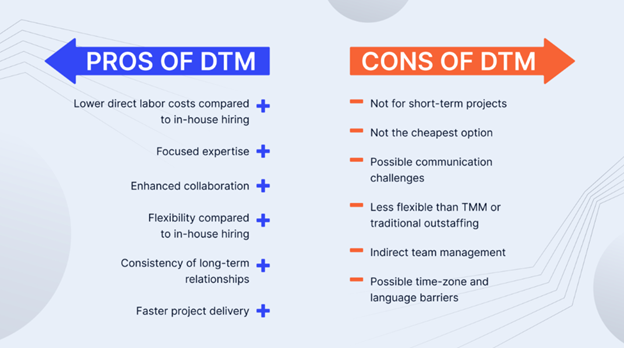
Not as Useful for Short-Term Projects
A dedicated team is designed for long-term projects, ongoing product expansion, and continuous improvement. A fixed-price model may be more suitable for small, one-off tasks, though it might not be as transparent as the dedicated team model.
Fram’s solution: We guide clients toward the most appropriate outsourcing models. For smaller tasks, we provide flexible engagement options, while the dedicated team ensures maximum value for large-scale SaaS platforms or MVP development.
Lack of In-House Presence
Unlike a traditional in-office team, a dedicated team works remotely, which may raise concerns about communication and collaboration.
Fram’s solution: We eliminate this gap with Agile project management, transparent reporting, and daily collaboration tools such as Kanban boards and Jira tickets. Our teams adapt to your time zone and communication style, ensuring seamless interaction with your in-house staff.
Dedicated Team Structure
A well-organized, dedicated software development team combines strategic leadership with technical execution to deliver results efficiently. At the top, the Product Owner defines the vision and priorities, while the Project Manager ensures smooth coordination, progress tracking, and clear communication. The core team typically includes:
Business Analysts: bridging business needs with technical requirements.
UX/UI Designers: creating intuitive and user-friendly interfaces.
Software Developers: building robust, scalable, and high-performing applications.
QA Engineers: ensuring reliability, performance, and seamless user experience through rigorous testing.
DevOps Specialists & System Administrators: handling infrastructure, CI/CD pipelines, cloud environments, and system performance optimization.
At Fram, we match each role to your unique project requirements, ensuring your dedicated team is a natural extension of your in-house IT specialists.Learn more about these roles on our blog.
Staff Augmentation vs Dedicated Teams
According toStatista Global IT Workforce Trends 2025, over 75% of tech companies use remote or hybrid teams. Tech companies are no longer limited by location; accessto a global talent pool has changed how teams grow. This shift has made choosing the right engagement modelmore important than ever.
Whether you’re building software, fixing a skill gap, or launching a new product, how you hire matters.
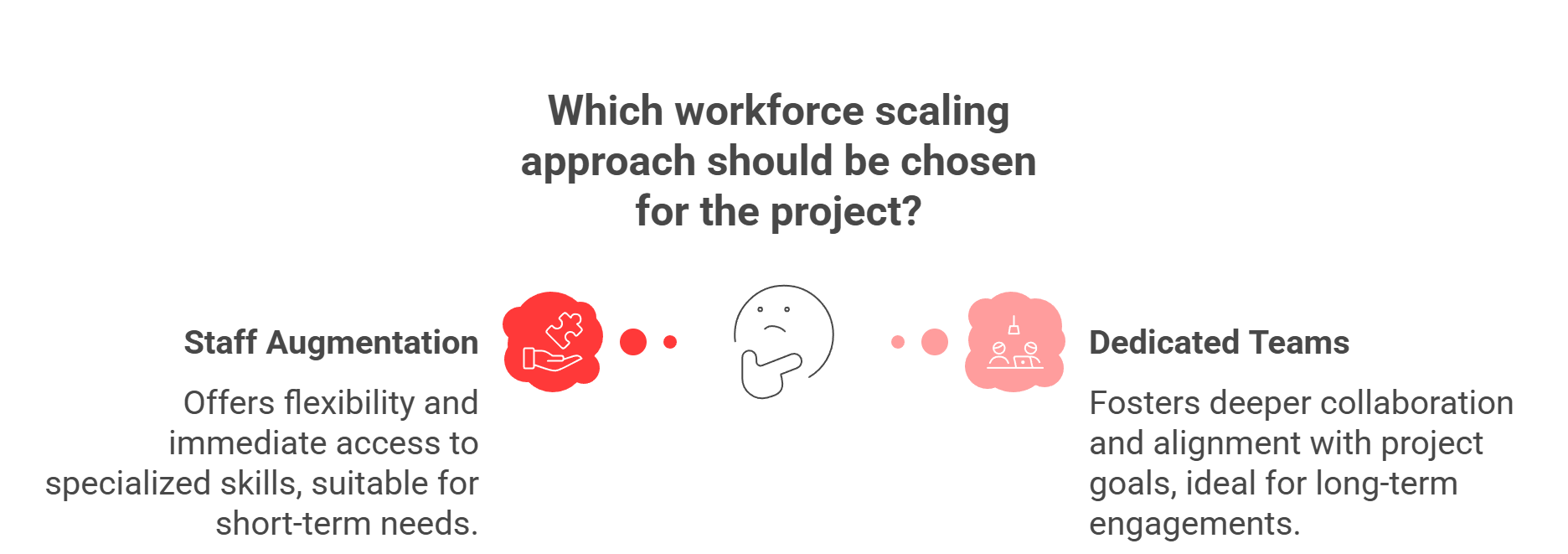
When businesses look to extend their development capacity, two common outsourcing models arestaff augmentation and dedicated development teams. While both provide access to skilled professionals, they serve different needs:
Staff Augmentation
Best for filling short-term skill gaps.
You hire individual IT specialists (e.g., a QA expert or a DevOps engineer) to work alongside your in-house team.
Limited involvement in long-term strategy and product expansion.
Useful for short projects or temporary workloads.
Dedicated Teams
Best for long-term projects and building complex SaaS platforms or enterprise solutions.
You gain a complete, cross-functional team—software engineers, QA experts, UI/UX designers, and project managers—working exclusively on your product.
Ensures consistency, knowledge retention, and cost efficiency.
A better fit for companies aiming to scale, innovate, and deliver a full-fledged digital product.
The growing popularity of this model reflects a wider industry trend. In fact, the dedicated development team market was valued at$98 billion in 2023 and is projected to grow at a CAGR of 5.1% through 2030.
How to Find Your Ideal Dedicated Development Team
Choosing the rightdedicated software development team can profoundly impact your project’s success. Here’s a step-by-step guide from Fram’s proven best practices:
1. Clarify Your Long-Term Business Goals and Strategy
Define your vision: Are you aiming to launch an MVP quickly, scale a SaaS platform, or expand a digital product? Knowing your timeframes, required expertise, and flexibility needs is essential. Dedicated teams are most effective when tied to long-term partnerships that may span 12+ months.
2. Use Referrals and Investigate Vendor Track Records
Start with trusted referrals—these yield the most reliable feedback. If that’s impossible, delve into vendor case studies and success stories to see how their experience aligns with your project. Remember: it’s not only about having developers—it’s about their real-world achievements.
3. Evaluate Management Capabilities and Cultural Fit
Remote work introduces challenges like time-zone differences and communication gaps. Look for vendors equipped to manage these effectively. With English as the working language and a culture of open communication, Fram reduces barriers and builds trust with clients’ teams.
4. Prioritize Value Over Price Alone
While cost is important, choosing solely on price can undermine quality. Explore models like fixed-price, flexible cost, or monthly-team billing. Dedicated teams offer flexibility, scalability, and deeper engagement with your product—factors that can outweigh upfront cost savings.
5. Focus on Best Practices for Offshore Collaboration
Successful offshore collaboration requires clear structures and intentional leadership. Teams should establish overlapping “golden hours” for cross-time-zone communication, adopt a unified development culture, and use consistent tools like Zoom, Slack, or Jira. Defining clear responsibilities helps enhance adaptability and quality, while empathetic leadership ensures psychological safety and a strong sense of team belonging.
Fram^ Dedicated Development Team Case Studies
1. Personio
WithPersonio, a leading European HR software platform, Fram embedded senior developers skilled in PHP Laravel, Kotlin, Spring Boot, and ReactJS to enhance onboarding, account creation, subscription management, invoicing, and integrations. This supported the company’s growth from a 10-person team into one of Europe’s top HR solutions.
2. Tyme Global
ForTyme Global, part of the Tyme Group, Fram deployed an eight-member dedicated team to optimize system performance, align with local stakeholders, and help launch five digital banking propositions across three countries. This demonstrates how tailored dedicated teams drive scalable innovation in fintech.
3. GoUpscale
For Singapore-based GoUpscale, Fram assembled a fully dedicated, multi-disciplined team that included developers, a product owner, and designers to build their MVP and extend support over time. We delivered a multi-platform solution featuring a web-based admin and sales portal, a public landing page, and mobile apps for both iOS and Android. The Fram^ team handled everything from UI/UX architecture and Scrum-based development to technical documentation, testing, support, and continuous enhancements.
FAQs
1. How Much Does Hiring Dedicated Development Teams Cost?
Costs vary by team size, skill level, and project scope. You typically pay a monthly fee covering salaries and vendor services. This model is more cost-effective than building in-house since it avoids hiring, training, and overhead expenses.
2. What is the Difference Between Project-based Teams and Dedicated Teams?
Project-based Teams are ideal for small, Short-term, well-defined projects with clear requirements and limited scope. They disengage after delivery.
Dedicated Teams: Long-term, fully integrated with your workflows, offering flexibility, scalability, and continuity.
3. Is It Possible to Customize Dedicated Teams?
Yes. Teams can be tailored with the roles you need—developers, QA, DevOps, designers, or PMs. You can scale up or down as your project evolves.
Conclusion
A dedicated software development team is more than just an outsourcing model—it’s a strategic partnership that drives scalability, accelerates time to market, and ensures long-term product success. From startups seeking cost efficiency to enterprises scaling complex platforms, the benefits of a dedicated team are clear: flexibility, transparency, and access to world-class talent.
At Fram, we’ve helped many companies achieve their goals through tailored teams of certified specialists, covering everything from cloud migration and DevOps to SaaS development and QA.
If you’re ready to transform your digital product with a high-performing, agile team, partner with Fram today and access the global talent to take your project from idea to market success.
Finding the right developers for your startup can make or break your business success. Many startups face both unprecedented opportunities and fierce competition for top talent. And with the rise of “vibe coding”, everyone, at least on face value, can put together what looks like a fairly functional tool. As with most things in life, […]
For startups, turning a vision into a successful product begins with focus and agility. A Minimum Viable Product (MVP) is the stepping stone that helps entrepreneurs validate ideas, reduce risks, and understand user needs without overcommitting resources. With this guide to MVP development for startups, you can take the first, most critical step toward achieving […]
Product teams hit the same wall: the roadmap keeps moving, but the internal team lacks the capacity or specialist skills to keep up. Hiring full-time developers takes months, and permanent headcount often doesn’t fit when the need is temporary, project-specific, or tied to a shifting delivery plan. Staff augmentation solves this by extending your team […]