How to Hire Developers For Your Startup: Ultimate Guide
November 11, 2025
Finding the right developers for your startup can make or break your business success. Many startups face both unprecedented opportunities and fierce competition for top talent. And with the rise of “vibe coding”, everyone, at least on face value, can put together what looks like a fairly functional tool.
As with most things in life, though, if something sounds too good to be true, it probably is. So, the key lies in understanding not just who to hire, but how to build lasting partnerships that scale with your startup’s growth. That’s exactly what we cover below!
Table of Contents
Key Takeaways for Startups Hiring Developers
Choose your tech stack before hiring. The technologies you select determine which roles you need, how your product scales, and what you’ll spend long-term. Lock in these decisions before writing job descriptions or screening candidates.
Hire from global talent pools. Markets like Vietnam, Poland, and Argentina give you access to skilled engineers at 50-70% lower cost than US or Western European rates. Geographic restrictions limit your options and inflate your budget.
Test developers with real product work. Don’t just settle on algorithm puzzle tests. Use domain-specific code challenges that mirror actual tasks in your codebase. Evaluate technical skills and communication together because both matter for remote collaboration.
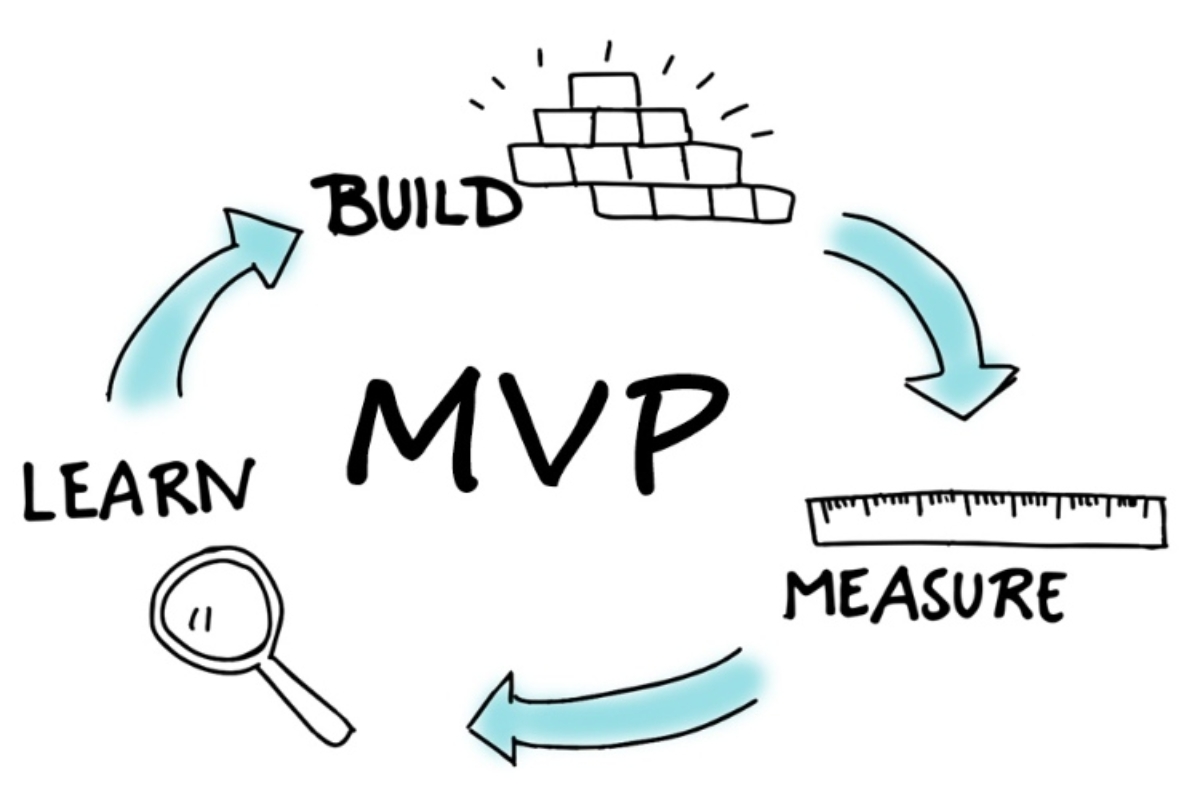
Start with a small project to validate fit. Launch an MVP or limited feature set first. This tests the team’s execution, reveals communication patterns, and proves product-market fit before you commit to a full build. Most MVPs need 3-5 developers over 8-12 weeks.
Dedicated teams beat in-house hiring for most startups. You get experienced engineers faster, scale up or down based on runway, and avoid recruitment overhead. Costs stay predictable. Quality remains consistent.
Build partnerships, not transactions. Long-term relationships with your development team create accumulated product knowledge, smoother onboarding for new features, and reliable delivery timelines. Treat developers as collaborators who understand your business, not vendors who execute tickets.
5 Essential Steps When Hiring Developers For Your Startup
1. First Nail Down Your Business Goals, Developer Needs, and Tech Stack!
Before you start crafting job descriptions or scouting for talent, the most critical step is deciding what technology stack your product should be built on. This decision impacts everything – your project’s scalability, hiring requirements, maintenance complexity, and long-term costs.
Why choosing the tech stack comes first:
It determines the type of expertise you’ll need (e.g., front-end vs back-end vs full-stack).
It impacts your project timeline, costs, and scalability.
It sets the foundation for future compatibility and maintenance efficiency.
How to choose the right tech stack:
Define the product’s purpose and target market. Is it a web-based SaaS platform, a mobile app, or a data-driven AI product? Each requires distinct backend, frontend, and infrastructure technologies.
Balance speed and scalability. Frameworks like Node.js or React support faster MVP delivery, while robust options like Java or .NET suit complex enterprise-grade systems.
Consider availability of talent. Choose technologies aligned with large, cost-effective developer communities—Vietnam, for instance, offers exceptional proficiency in JavaScript, PHP, and C#/.NET.
Prioritize long-term maintainability. A unified stack reduces technical debt and simplifies future scaling. Fram^’s architects often recommend technology combinations such as React + Node.js + AWS for startups needing dynamic growth.
Once your tech direction is clear, outline what skills and roles align with it:
For software developers/architects/QA/DevOps:
Start by defining your technology stack based on your product roadmap. Do you need expertise in modern frameworks like React and Node.js, or are you building on legacy systems requiring .NET or PHP knowledge? According toTopDev’s Vietnam IT Market Report 2024-2025, approximately 560,000 professionals work in computer science and IT-related fields globally, but only 30% possess the practical skills needed for key roles.
Consider your immediate versus long-term needs. An MVP might require two to three full-stack developers who can work across the entire stack, while scaling will demand specialists in backend architecture, DevOps automation, and security. The optimal team size to start is typically 4-5 people, providing enough diversity without creating coordination challenges.
For UX/UI designers:
Great design differentiates successful products from failed ones. Your design needs should align with your user acquisition strategy and brand positioning. Early-stage startups typically need generalist designers who can handle everything from user research to visual design and prototyping.
Look for designers who understand user-centered design principles and can validate assumptions through testing rather than relying solely on aesthetic preferences.
>> By prioritizing your tech stack early, you prevent misalignment between ideas and execution. This clarity ensures every developer hired fits your technical vision, not just your team culture—saving time, budget, and iteration cycles later on.
Global talent accessibility has revolutionized startup hiring, with remote developer jobs projected to grow17% through 2033. Smart startups tap into international talent pools rather than limiting themselves to expensive local markets.
Why Vietnam stands out as a strategic choice:
Vietnam has emerged as one of Southeast Asia’s most compelling destinations for startup development teams. The country produces over 55,000 IT graduates annually, joining a talent pool of approximately530,000 active IT professionals. Vietnamese software developers consistently rank highly for their technical skills, placing 2nd in the Asia Pacific region according to the Global Skills Index 2020.
Beyond raw numbers, Vietnam offers several strategic advantages. Developers demonstrate strong proficiency in operating systems, computer networking, and human-computer interaction, making them well-suited for complex full-stack development. The country’s strong emphasis on STEM education combined with IT-specialized schools produces graduates with practical, job-ready skills.
Cost efficiency remains compelling. Although the cost for software developers might vary based on the programing languages and skillsets, hiring engineers in Vietnam is significantly more affordable than in more developed countries such as the US. This cost differential allows startups to build larger teams or allocate more resources to product development and marketing.
fram^ exemplifies this advantage, offering dedicated development teams with Vietnamese talent that combines technical excellence with cost-effectiveness. Vietnamese developers excel in JavaScript, Java, PHP, C#/.Net, and Python – the core technologies most startups need.
3. Vet Programmers On Your Specific Needs
Generic hiring processes fail startups. Every company has unique technical requirements, cultural values, and growth trajectories that demand customized evaluation criteria.
Technical assessment best practices:
Beyond resume screening, implement practical assessments that mirror real work. Code challenges should reflect actual problems your product solves rather than abstract algorithmic puzzles. For a fintech startup, test candidates on data security and transaction processing. For a SaaS platform, evaluate their API design and database optimization skills.
fram^ excels in this area through several key differentiators:
Our talent acquisition specialists have been working with many startups across multiple domains, giving us deep insight into what separates good candidates from exceptional ones. We maintain high recruitment standards for both technical skills and soft skills, recognizing that technical brilliance means nothing if a developer can’t communicate effectively with remote team members.
We understand that startups need talented developers—professionals with deep expertise in one area plus broad knowledge across multiple domains. This versatility proves invaluable when early-stage companies face unexpected technical challenges requiring creative solutions.
Evaluating experience and potential:
The experience vs. potential debate remains contentious. Data shows that fresh graduates require 6-12 months to become fully productive and need close supervision during that period. For startups making their first technical hire, this investment rarely makes sense.
However, a balanced team composition combining experienced leads with mid-level coders offers optimal results. Senior coders provide architectural guidance and mentorship while mid-level talent handles implementation. This structure maximizes output while managing costs effectively.
4. Start With a MVP or Relatively Small Project
Smart startups minimize risk by beginning withMinimum Viable Products (MVPs) before committing to full-scale development. This approach validates your concept while testing your development partner’s capabilities.
Why the MVP approach works:
Startups save up to 70% by implementing an MVP-first strategy, according to industry research. This approach validates your product-market fit before committing extensive resources to full-scale development.
From a hiring perspective, MVP projects allow you to evaluate developer performance in real conditions. You’ll quickly learn whether they:
Understand your product vision and translate it into functional code
Communicate proactively about challenges and blockers
Meet deadlines and manage their time effectively
Collaborate well with your team and incorporate feedback
Demonstrate the technical skills they claimed to possess
Benefits beyond risk mitigation:
MVP development creates several additional advantages. It provides faster time to market, allowing you to gather user feedback and iterate quickly. The focused scope forces prioritization of core features, preventing scope creep that plagues many early-stage products.
For startups working with dedicated development teams from fram^, the MVP phase typically involves 2-4 developers working for 3-4 months. This timeframe allows sufficient depth to assess technical capabilities and team dynamics without excessive commitment.
2 Case Study Examples:
fram^’s work with Upscale, a Singapore-based fintech startup, exemplifies this approach. We built their MVP with a full team including backend developers, frontend developers, iOS, Android, QA, tech lead, product owner, and designer. After successful MVP delivery, the engagement expanded to ongoing mobile app development, demonstrating how strong initial performance leads to lasting partnerships.
In a different case with AllEasy Go, an online delivery service platform for the Philippines market, we deployed a full development team to help ship their MVP quickly in just 1.5 months. The MVP included core features to capture people’s demanding in sending and receiving goods during the height of the pandemic, then our team continued to extend to build multiple systems with Customer Super App, Rider App and OMS App. At its peak, the team consisted of 15 members.
5. Build a Lasting Partnership
Successful startups view developer hiring as relationship building rather than resource acquisition. With software development lifecycle extending beyond initial launch, ongoing maintenance, updates, and feature enhancements require sustained collaboration.
Partnership advantages:
Reduced onboarding time for future projects
Deep business context understanding accumulated over time
Predictable costs and timeline estimation
Scalability – easy team expansion as needs grow
Building lasting partnerships involves:
Clear communication protocols – Regular meetings, progress reports, feedback loops
Shared success metrics – Align developer incentives with business outcomes
Professional development – Support team member growth and skill advancement
Cultural integration – Include remote teams in company events and decision-making
For startups seeking this level of long-term commitment and support, fram^’s dedicated teams offer comprehensive solutions including recruitment, infrastructure, management, and administration – allowing founders to focus on business growth rather than team logistics.
Common Hiring Challenges For Startups (And Tips To Avoid Them)
Understanding these challenges helps startups prepare realistic expectations and mitigation strategies. Building and managing development teams for startups is fraught with challenges, but awareness enables proactive solutions.
Budget constraints rank among startups’ most pressing challenges. With70% of companies citing cost reduction as their top reason for outsourcing, financial pressures clearly drive strategic decisions.
>> fram^’s dedicated development team model eliminates most of these costs. Clients access top Vietnamese talent at competitive rates while fram^ handles all recruitment, legal compliance, payroll, and administrative overhead. This arrangement allows startups to redirect savings toward product development, marketing, or extending runway.
2. Lack of Experience and Qualified Talent Onsite
Many startup founders lack technical backgrounds, making developer evaluation and management challenging. Only30% of graduates possess practical skills required for key development roles, creating a skills gap even among available candidates.
Additionally, geographic limitations restrict access to qualified candidates. Vietnam faces a projected shortfall of150,000-200,000 IT personnel annually by 2025, yet it still offers significantly more accessible talent than many Western markets, where competition drives salaries skyward.
>> fram^ bridges this gap by providing business analysts, product owners, and technical architects who can interface between technical teams and business stakeholders. Our management team includes experienced technical architects, project managers, and delivery managers who monitor quality and ensure teams meet business objectives.
3. Ever-Evolving Tech Standards
Technology changes rapidly, and new frameworks emerge faster than most developers can learn them. What works today may become obsolete within 18-24 months, creating constant pressure to upskill and adapt.
For startups, this evolution creates dilemmas. Should you build on cutting-edge technologies that might lack stability, or use established frameworks that might limit future flexibility?
>> fram^’s engineers stay current through continuous learning initiatives. Our experience across 50+ industries and 300+ delivered projects means we’ve worked with virtually every modern technology stack and can advise on optimal choices for specific use cases.
4. Multitasking – Juggling Many Things
Startup founders wear multiple hats, often lacking dedicated time for proper developer management. This leads to unclear requirements, inconsistent communication, and suboptimal team performance.
>> Outsourcing to a dedicated development team removes this burden. fram^ provides senior project managers who handle daily team management, sprint planning, progress tracking, and quality assurance. Founders receive regular updates and maintain strategic control without drowning in technical minutiae.
95% of successful remote team management requires different skills than traditional in-person oversight. Many startup founders struggle with remote team dynamics, performance monitoring, and cultural integration.
>>fram^’s dedicated team model includes comprehensive management support. Our <20% turnover rate on projects with 12+ month duration and 3.5-year average tenure demonstrates our effectiveness at keeping teams engaged and productive. We handle personnel issues, career development, and performance management, ensuring your developers remain motivated and focused on delivering excellent work.
What To Look For In Your Startup’s Development Team
Building the right team goes beyond technical skills. Remote work requires a high degree of collaboration, adaptability, and communication, making soft skills equally important as coding capabilities.
1. Expertise and Experience
Technical proficiency forms the baseline requirement. Developers should demonstrate mastery of your core technologies through portfolios, GitHub contributions, technical certifications, or previous project work.
However, startup expertise differs from corporate experience. Look for candidates who have worked in fast-paced, resource-constrained environments where they wore multiple hats and adapted to changing priorities. Experience building MVPs, working on small teams, and shipping products under tight deadlines proves more valuable than years spent on a single feature at a large company.
2. Strong Communication and Teamworking Skills
With effective communication accelerating project speed and promoting creativity, these skills determine team success more than individual brilliance.
Strong teamwork abilities manifest through active listening, constructive feedback, knowledge sharing, and ego-free collaboration. In startups, where small teams must accomplish ambitious goals, toxic personalities or poor collaborators create disproportionate damage.
3. Resiliency
Startups face constant challenges – technical problems, changing requirements, competitive pressures, and resource constraints. Resilient developers bounce back from setbacks and maintain productivity despite stress.
Look for evidence of resilience through questions about past challenges. How did they respond when a key feature didn’t work as expected? How did they handle a failed launch or negative user feedback? Resilient candidates view obstacles as learning opportunities and demonstrate persistence despite prolonged difficulties.
4. Creativity and Resourcefulness
Resource constraints define startup life. Resourcefulness – the ability to solve problems by making the most of available resources – separates programmers who thrive in startups from those who need extensive infrastructure and support.
Creative developers find elegant solutions to complex problems, often by thinking outside the box and questioning set assumptions. They adapt existing tools for new purposes, build prototypes quickly to test hypotheses, and avoid over-engineering solutions.
During interviews, present candidates with realistic startup scenarios involving limited time, budget, or technical resources. Their approaches reveal whether they possess the resourceful mindset necessary for early-stage success.
5. Fast Growth
Startups need team members who actively invest in learning and self-improvement. Technology evolves rapidly, and programmers who stop learning quickly become liabilities.
Look for candidates who regularly attend conferences, contribute to open-source projects, maintain technical blogs, complete certifications, or experiment with new technologies. Vietnamese programmers particularly excel here, demonstrating strong career growth ambitions and continuous learning mindsets.
6. Budget Consciousness
Unlike large corporations with extensive budgets, startups must maximize every dollar. Developers should understand this reality and make cost-conscious technical decisions.
This doesn’t mean always choosing the cheapest option, but rather evaluating tradeoffs between cost, time, and quality intelligently. Cloud architecture decisions, third-party service selections, and technical debt management all involve financial implications that thoughtful developers consider.
Hiring In-House vs Dedicated Development Team for Startups
This decision significantly impacts your startup’s trajectory, affecting everything from product quality and timeline to budget allocation and long-term scalability.
Here’re some pros and cons of each team that you can refer to for your decision.
Factor
In-House Development
Dedicated Development Team
Cost
High (salaries, benefits, office space)
Lower (pay for services used)
Time to Start
2-4 months
4-8 weeks
Scalability
Difficult and slow
Easy and flexible
Control
Complete direct control
Strategic control, partner handles execution
Talent Access
Limited by geography
Global talent pool
Expertise Range
Depends on hiring success
Access to specialists on-demand
For most startups, dedicated development teams offer optimal balance of cost, speed, and quality. fram^’s model exemplifies this approach with 96/100 satisfaction scores and proven track record across 100+ remote projects.
Complete control over daily operations, workflows, and priorities
Cultural alignment with company values since team members work exclusively for you
Immediate communication without time zone differences or external dependencies
Stronger loyalty as employees feel invested in the company’s long-term success
Disadvantages:
Higher costs including salaries ($90,000-$180,000+ annually in the US), benefits, office space, equipment, and training
Slower hiring as recruiting quality candidates takes weeks or months
Limited talent pool restricted by geography and local market conditions
Scaling challenges since adding or reducing headcount involves significant time and expense
Legal and administrative burden of managing payroll, benefits, compliance, and HR issues
Dedicated Development Teams
Advantages:
Cost efficiency with rates 2-3x lower in regions like Vietnam while maintaining quality
Faster deployment with teams ready within 4-8 weeks versus months for in-house hiring
Scalability allowing easy team adjustments based on project phases or budget constraints
Access to specialized expertise across diverse technologies and domains
Reduced administrative overhead as the outsourcing partner handles HR, legal, and infrastructure
Risk mitigation by sharing development challenges with experienced partners
Disadvantages:
Limited direct control over daily activities compared to in-house teams
Potential communication challenges due to time zones or cultural differences (mitigated with proper partners like fram^)
Security considerations requiring strong NDAs and contracts for IP protection
Decision Matrix: Which Setup Fits Your Startup?
We’ll include freelancers here as well, just in case the size of your startup is small enough. Or perhaps you have an MVP, prototype that could use support. It’ll all depend on your stage, budget, and how much in-house leadership you already have.
So, here’s a simple decision matrix you can use as a quick shortcut to identify which setup tends to work best for startups like yours.
Your situation
Recommended model
Why this usually works best
Pre-seed / idea stage, no technical co-founder, limited runway
Bringing talent in-house maximises control, culture alignment, and long-term ownership of the codebase.
Short-term experiments or one-off features, low criticality
Freelancers or a small project team
Best for well-bounded, one-off work where continuity and deep domain knowledge matter less.
fram^’s Experience With Startups
fram^ brings extensive startup development experience, having supported over 50 businesses across Europe and Asia since 2013. Their venture building background includes 6 live ventures in various funding stages and successful exits like Intrepid and Pangara.
Notable startup partnerships:
Our work with GoUpscale (Singapore-based fintech) exemplifies our comprehensive approach. Starting with MVP development including web portal, mobile apps, and core features, we deployed a full team of developers, product owner, and designer. The engagement expanded as Upscale grew, with fram^ continuing to support mobile app development, maintenance, and feature enhancement. Results included a streamlined sales management system, multi-tenancy dashboard, and scalable microservices architecture.
Beatly, a Swedish marketplace connecting brands with influencers, represents our ongoing startup partnerships. As an early-stage company, Beatly needed a team that could work iteratively, implementing customer requests while continuously improving functionality. Our team of two full-stack programmers and one business analyst integrated directly with Beatly’s in-house engineering team, participating in daily agile product development.
ANSpace, a Vietnamese healthcare startup, engaged fram^ to design and develop their comprehensive health and mindfulness mobile application. Our team of 4+ coders delivered over 4 months, handling everything from system design to backend development and third-party integrations. The app successfully launched on both Google Play and App Store, establishing ANSpace as a leader in their market.
These examples share common themes: rapid deployment, flexible team scaling, ongoing collaboration, and tangible business results. Our 96/100 employee and client satisfaction score reflects our commitment to these principles.
Technology expertise:
Our software engineers possess deep expertise across modern technology stacks including React, Node.js, Python, Ruby on Rails, .NET, React Native, Flutter, and more. This breadth ensures we can support startups regardless of their technical choices, while our experience with microservices, cloud infrastructure (AWS, Azure, Google Cloud), and DevOps enables scalable architectures from day one.
Startup-focused services:
We offer flexible engagement models tailored to startup needs:
Project-based teams for defined deliverables with fixed timelines
Dedicated teams for ongoing development with monthly commitment
Venture tech partnerships including SAFE agreements where we invest in exceptional founders
All engagements include fram^’s comprehensive support—recruitment, infrastructure, management, and administration—allowing founders to focus on building great products rather than managing development logistics.
FAQ on How To Hire Developers for a Startup
How many developers does a startup need?
Optimal team size depends on project complexity and timeline. Most startups begin with 4-6 developers for MVP development, scaling based on product requirements:
fram^’s flexible average team size reflects this optimal range for most startup projects.
How much does it cost to hire developers for a startup?
Costs vary dramatically by location and hiring model. Based on current referred market data:
US in-house developers: $156,000-234,000 annually (including benefits)
Freelancers: $62,400-249,600 annually (depending on experience)
Vietnam dedicated teams: $83,200-166,400 annually
Offshore agencies: $62,400-156,000 annually
Hidden costs add 40-70% to base salary for in-house teams, including recruitment, benefits, equipment, and turnover replacement. Dedicated teams typically include these costs in their rates.
For specific project estimation, contact fram^ for customized quotations based on your exact requirements and timeline.
Should you hire developers before or after you get funding?
Start with validation before significant development investment. The optimal approach:
Pre-funding:
Validate your idea through user interviews and market research
Create basic prototypes or mockups to test concepts
Build minimal team for proof-of-concept development
Post-funding:
Scale development team based on available capital
Implement full MVP with proper development processes
Plan for ongoing maintenance and feature development
Many successful startups use revenue-based team scaling, expanding development capacity as funding or revenue milestones are achieved.
What are some of the best countries for recruiting developers?
Top destinations balance cost, quality, and collaboration factors:
Vietnam: Strong technical skills, cost-effective, cultural alignment (#2 in ASEAN for developer skills)
Ukraine: High-quality developers, EU timezone compatibility
India: Large talent pool, diverse specializations
Poland: Strong in enterprise development, European business culture
Brazil: Growing tech scene, timezone benefits for US companies
Vietnam stands out for startups due to its 530,000+ skilled professionals, competitive costs, and English proficiency. fram^’s success demonstrates Vietnam’s effectiveness for startup development.
Should you hire fresh graduates for your startup?
Fresh graduates can be valuable with proper mentoring. Consider these factors:
Advantages:
Lower costs – typically 40-60% less than senior developers
High motivation and eagerness to prove themselves
Modern education – current with latest technologies and practices
Growth potential – can develop into senior team members
Considerations:
Require mentorship – need senior programmer guidance
Limited experience – may struggle with complex architecture decisions
Higher training investment – longer onboarding periods
Optimal approach: Combine fresh graduates with experienced senior developers.
Want to Hire fram^ Developers to Help With Your Startup?
Dedicated development teams represent the optimal solution for most startup development needs. fram^ offers comprehensive startup support through:
Proven startup experience – 50+ businesses supported since 2013
Cost-effective solutions – 40-70% savings compared to local hiring
Rapid deployment – teams ready in 4-8 weeks
Full management support – technical architects, project managers, and delivery oversight
Scalable partnerships – easy team adjustments as your startup grows
Ready to accelerate your startup development?Contact fram^ to discuss your specific requirements and receive a customized proposal. Their 96/100 client satisfaction score and <20% turnover rate demonstrate the quality partnership you can expect.
Final Words
Building successful startup development teams requires balancing multiple factors – cost, quality, speed, and long-term scalability.
By following these proven strategies and partnering with experienced providers like fram^, your startup can access world-class development talent while maintaining the flexibility and cost-effectiveness essential for early-stage success.
To keep up with global competition, businesses must innovate quickly while maintaining high-quality standards in their software products. However, building an in-house software development team can be time-consuming and costly. That’s where a dedicated software development team comes in. Whether you’re planning an MVP development, expanding a digital product, or launching a new SaaS platform, […]
For startups, turning a vision into a successful product begins with focus and agility. A Minimum Viable Product (MVP) is the stepping stone that helps entrepreneurs validate ideas, reduce risks, and understand user needs without overcommitting resources. With this guide to MVP development for startups, you can take the first, most critical step toward achieving […]
Product teams hit the same wall: the roadmap keeps moving, but the internal team lacks the capacity or specialist skills to keep up. Hiring full-time developers takes months, and permanent headcount often doesn’t fit when the need is temporary, project-specific, or tied to a shifting delivery plan. Staff augmentation solves this by extending your team […]