For startups, turning a vision into a successful product begins with focus and agility. A Minimum Viable Product (MVP) is the stepping stone that helps entrepreneurs validate ideas, reduce risks, and understand user needs without overcommitting resources.
With this guide to MVP development for startups, you can take the first, most critical step toward achieving product-market fit and scaling your business!
Table of Contents
Key Takeaways on MVP Development for Startups
Just in case you’re in a rush – here’s a quick rundown of the basics and what we get into below!
Focus on core value propositions.
Prioritize a clear understanding of your target market.
Use an iterative approach to adapt to real user feedback.
Reduce risks by testing in smaller, active user bases before scaling.
What is a Startup’s Minimum Viable Product (MVP)?
A Minimum Viable Product (MVP) is the basic version of a product that focuses on delivering core functionality to address the primary needs of potential users. The concept, popularized by Eric Ries inThe Lean Startup, helps startups validate their business idea with real users while minimizing development costs and unnecessary risks. An MVP allows businesses to gather valuable feedback, ensuring the product meets market demands before committing to full-scale development.
An MVP is not just about launching quickly; it’s about learning. It helps startups evaluate market demand and improve customer experience before committing to larger investments.
Core Philosophy: Iteration, Learning, and Risk Reduction
We know that startups operate with limited cash and incomplete information about what customers actually want. The goal is to learn what works before running out of money. Whether it’s a mobile app, a software platform, or a real estate app, the MVP approach allows businesses to move efficiently toward achieving product-market fit. And Teams that treat development as discovery rather than execution reduce waste and find product-market fit faster. And we have an entire comparison of AI minimum viable products vs traditional MVPs that will help you find the right fit.
This means building in small increments: Ship a feature, measure response, and adjust based on what you learn. Each release tests an assumption about user behavior or market demand. When an idea fails, you’ve only spent weeks instead of months to learn it won’t work.
Choose technologies and architectures that let you change direction without rewriting the entire codebase. Avoid overly long-term vendor commitments until you’ve proven the business model. Because each constraint you remove gives you more room to pivot when user feedback contradicts your assumptions.
This rhythm follows the classic Build-Measure-Learn loop: ship a small slice, observe how users behave, and adjust based on evidence. Each cycle reduces uncertainty and shapes the next feature with more clarity.
And this approach also combats startup fatigue, the pattern where new initiatives stall in the planning phase, waiting for perfect conditions, full budgets, or committee approval. Ship something small that delivers value. Early traction attracts support, funding, and team members better than polished pitch decks.
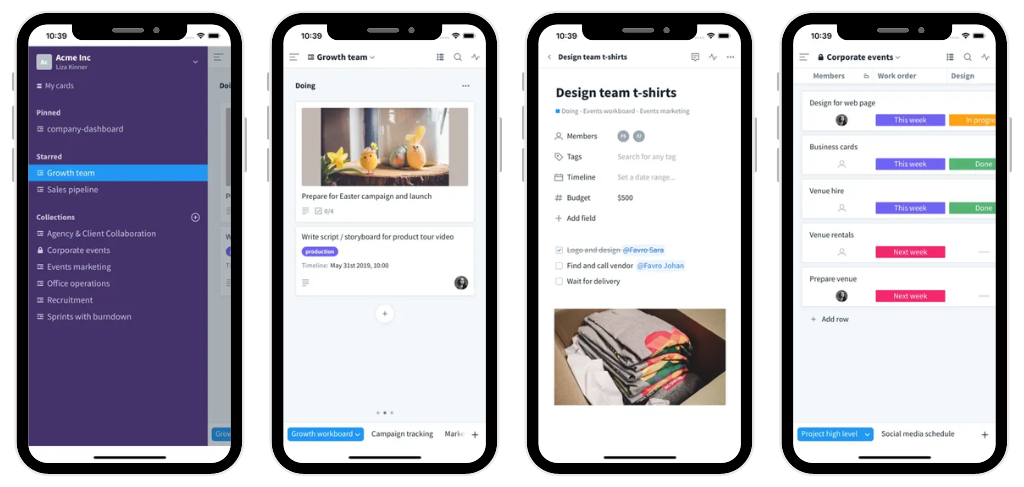
For example, Favro partnered with fram^ to build and scale their early MVP into a flexible collaboration platform used by global teams.
The first release focused on core planning features, quick iteration, and clean mobile access. Continuous testing cycles and fast feedback loops helped the product evolve into the full SaaS platform Favro is today.
1. Prototyping to Test Concepts Before Committing to Production
Prototyping explores untested ideas before writing production code. A prototype is disposable: its value comes from what you learn, not what you build. Teams use prototypes to test architecture decisions, experiment with UI flows, or validate third-party integrations.
Early mockups let stakeholders interact with concepts and surface expectations that never appear in written specs. You discover misalignment between teams, identify technical constraints, and refine scope before development starts. Cheap tests prevent expensive rewrites later.
Prototypes also help with vendor evaluation. Build a quick proof of concept with a third-party API or service to confirm it handles your use case before signing contracts or integrating it deeply into your codebase.
2. User Feedback and Idea Validation
The MVP acts as a bridge between your vision and the real-world market. Launching an MVP allows startups to test their assumptions with real users, providing valuable data about whether the product solves a genuine problem.
For instance, Airbnb’s early MVP was a simple website featuring pictures of apartments in San Francisco. San Francisco was designed to test whether people would pay for short-term rentals. The overwhelming interest from users validated the business model and paved the way for its global success.
3. Cost-Effective Development
Instead of spending months or even years on a fully-fledged product, an MVP limits costs by focusing only on essential features. By eliminating unnecessary additional features, startups can allocate resources more effectively and reduce the risks of building a product that doesn’t resonate with users.
Tip: Agile development practices can further streamline the development process, allowing teams to adapt quickly through an iterative process based on feedback and market changes.
4. Faster Time to Market
Speed is critical for gaining an edge in competitive industries. Launching an MVP allows startups to enter the market quickly and stay ahead of competitors. This approach also gives them the agility to adapt to market trends and user needs.
Example: Instagram initially launched as a single-feature MVP focusing on photo-sharing. Its simplicity enabled rapid adoption, eventually growing into one of the most popular social media platforms globally.
5. Clear Early Signals Through Lean Analytics
An MVP generates measurable signals about whether you’re progressing toward product-market fit. Tracking early metrics like activation, retention, and basic unit economics helps teams understand what resonates and what must change.
Choose a small set of metrics that reflect your core value. Review them after each release so you can adjust direction based on real behaviour, not opinions.
Metric
What It Measures
Why It Matters
Activation
First meaningful action by a user.
Shows whether users experience value early.
Retention
Whether users return.
Strongest early indicator of PMF.
Basic Unit Economics
CAC, LTV, simple conversion rates.
Helps founders decide if scaling is viable.
Engagement
Frequency and depth of use.
Shows whether the product solves a recurring problem.
Qualitative Feedback
Interviews and comments from early users.
Context to guide what to build next.
6. Attracts Investors
As you may have learned through experience, investors are more likely to back startups with proven traction. A functional MVP demonstrates a business’s potential to solve customer pain points and scale. This makes it easier to secure funding from investors looking for compelling value propositions.
At Fram^, we understand that attracting investors is crucial for startup success. By developing a well-structured MVP, we help startups prove their product’s potential and validate their business model.
Our team works closely with entrepreneurs to craft MVPs that address key customer pain points, providing real-world evidence that accelerates investor confidence.
Types of Minimum Viable Products
There are different types of MVPs you can consider before moving forward.
Low-Fidelity MVPs
Low-fidelity MVPs are basic representations of a future product designed to test an idea with minimal effort.
Landing Pages: Create a simple web page to explain your product, collect sign-ups, and gauge interest. Tools like Webflow and Carrd are great for this.
Videos: Use explainer videos to showcase the product idea. Dropbox’s MVP video is a classic example.
High-Fidelity MVPs
High-fidelity MVPs are more advanced and focus on providing a realistic user experience.
Single-Feature MVP: Focus on one functionality to test its impact and demand. For example, Twitter’s early MVP centered solely on posting short updates.
Piecemeal MVP: Combines off-the-shelf tools to simulate a product’s functionality. For instance, Airbnb initially used simple email communication to match hosts and guests.
MVP vs Proof of Concept vs Prototype
While all three approaches aim to validate an idea, they differ in scope and purpose.
Aspect
Proof of Concept (PoC)
Prototype
MVP
Purpose
Validates technical feasibility
Tests product design
Validates market demand
Audience
Internal teams
Developers, designers
Real users representing your potential customers
Functionality
None
Limited
Fully functional for testing
Cost
Low
Medium
Medium to High
By understanding these distinctions, startups can choose the right approach based on their goals.
How Startups Can Build an MVP (Step-by-Step Through Stages)
There are several important development stages to be aware of when creating your MVP.
0. Validate the Problem Before You Start
Before researching markets or scoping features, confirm that the problem is real, painful, and worth solving. Use quick, low-cost tests like problem interviews, no-code landing pages, or simple sign-up flows to check whether people show genuine interest or intent.
This step ensures you’re investing in a problem that matters. Once you confirm there’s meaningful demand, you can move into deeper research.
1. Research the Market and ICPs to Understand the Problem in Detail
After validating that the problem exists, analyze your target market to understand who experiences it, how often, and in what context. Map the pain points across your ideal customer profiles (ICPs), and use surveys, structured interviews, and market data to uncover patterns and motivations.
This turns a validated problem into a clear, evidence-based understanding of user needs.
2. Perform Competitive Analysis
Study the competition to find gaps and opportunities. Tools likeSEMrush andAhrefs can help you identify competitors’ strengths, weaknesses, and untapped market potential.
3. Define Core Features of MVP
Focus on the minimum set of basic features required to deliver value to your users. Prioritize the essential features based on their importance and feasibility.
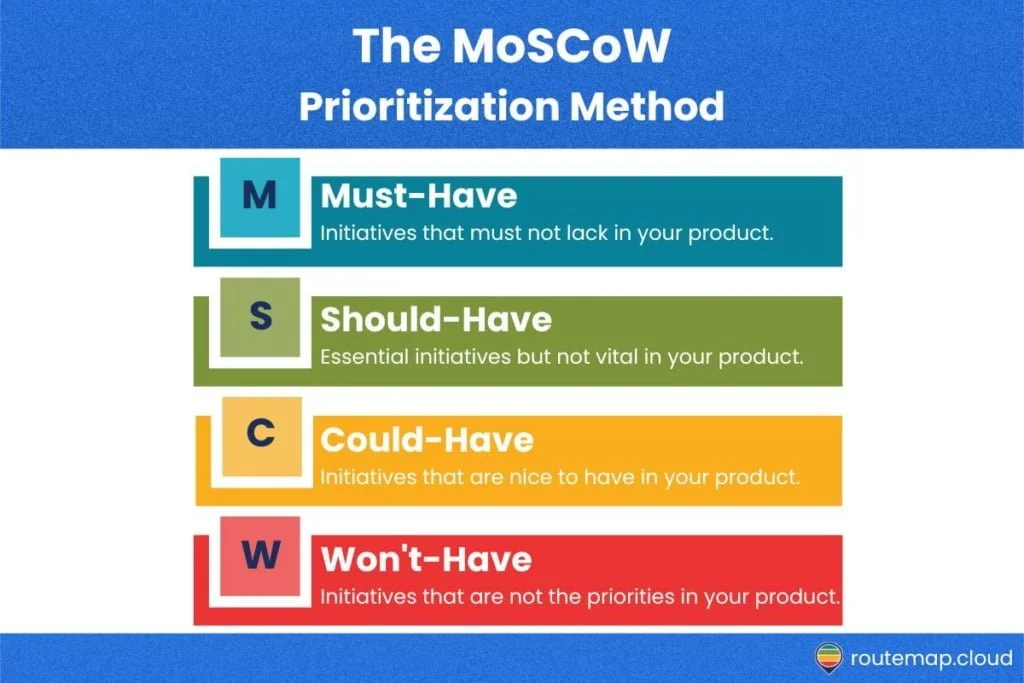
Tip: Use the MoSCoW method (Must-Have, Should-Have, Could-Have, Won’t-Have) to prioritize your feature list
4. Plan Your Architecture for MVP Flexibility
Build your first version to accommodate change. Early-stage products face constant pivots as you learn what users actually need. Architecture decisions that lock you into specific vendors, frameworks, or deployment models make those pivots expensive.
Separate your client and server with clean API boundaries. If you start with a web app and later need native mobile apps, your backend should expose REST or GraphQL endpoints that serve data to any client. The logic stays on the server. The presentation layer changes without touching core business rules.
Wrap your database calls behind a repository pattern so you can swap PostgreSQL for MongoDB without rewriting queries throughout your codebase. Abstract file storage behind an interface that works with S3, Azure Blob, or local disk during development.
Follow YAGNI – You Ain’t Gonna Need It. This is where you resist building features before you prove the product needs them. Complex authentication systems, multi-tenant architectures, and advanced caching layers add development time and maintenance burden. Start simple. Add complexity only when real usage patterns demand it.
This flexibility preserves cash and development time when you pivot. Teams that can change direction without rebuilding the entire system ship faster and spend less during the high-uncertainty early stages. The architecture supports learning rather than predicting the future.
5. Design and Build MVP Prototype
Create a visual representation of your MVP using tools like Figma, Sketch, or Adobe XD. This helps align your team and ensures the design meets user needs.
At Fram^, we use Figma to facilitate seamless collaboration across teams and ensure rapid iteration, allowing us to refine the design based on user feedback. This process ensures that your MVP is user-friendly and positioned for market success, helping you move quickly from concept to launch with confidence.
6. Test Throughout
Testing should occur at every stage of development to ensure the MVP meets user expectations. Conduct usability tests, gather feedback, and iterate accordingly.
7. Launch and Nurture User Feedback
Deploy your MVP to your target audience and track key metrics using tools like Google Analytics, Mixpanel, or Amplitude. Focus on learning about customers – how they interact with the product and where improvements are needed.
8. Iterate and Adapt
Use the insights gathered to improve the product. Address user pain points, enhance the user interface and user experience (UI/UX), and expand functionality based on real-world data.
9. Accelerate via AI Integration
AI now plays a key role in the speed of MVP development. Modern teams use models to generate boilerplate code, create UI components, and draft early versions of features. Check out our AI implementation services to learn more!
“Vibe coding” accelerates exploration. Developers describe the intent, and the AI fills in implementation details to create quick prototypes or initial drafts. This is ideal for early discovery work. If you’re interested, check out our complete guide on how to hire developers for your startup!
As of 2025, more than 30% of Microsoft code is written or assisted by AI. And as a result, teams gain significant velocity by letting AI handle repetitive patterns while humans focus on design and user experience.
For you, as your product grows past the MVP phase, you can launch multi-agent setups to help coordinate tasks. A central PM agent delegates research, prototyping, or testing tasks to specialized agents. This keeps the backlog moving and reduces manual coordination overhead.
How to Find The Best Developer for a Startup’s MVP?
One of the great things about outsourcing the development of your MVP is that you’ll almost always save time and money.
You’re working with experts with a long track record of doing this successfully. Here are some tips for how to find the best developer for your needs.
What an Effective MVP Team Usually Looks Like
Early MVP teams stay small. A typical squad includes a product manager who clarifies the problem, a designer who shapes the experience, and one or two developers who ship working slices quickly. You scale this team only after validating traction so you don’t increase burn before the idea proves itself.
Here are some tips for how to find the best developer for your needs.
Identify Requirements
Clearly outline what your MVP needs to achieve. Define the tech stack, timeline, and budget to ensure alignment with development teams.
Choose the Right Tech Stack
Select a scalable and flexible tech stack that supports your MVP’s needs. Popular options include Node.js, React, and Ruby on Rails.
At Fram, we use React and Node.js to build MVPs because they ensure speed and scalability.
Find a Developer Team With a Proven Track Record
Partner with a development teamwith a proven track record of building startup MVPs. Look for teams experienced in agile development with strong collaborative skills.
FAQ on MVP Development for Startups
Here are some key answers to common questions about MVP development for startups!
How much does it cost to build an MVP?
The cost of developing an MVP generally falls between $10,000 and $50,000. The final expense depends on several factors, including the complexity of the features, the type of development path chosen (in-house, outsourced, or no-code tools), and the expertise level of the development team. Additional considerations like design requirements, integrations, and ongoing iterations can also impact the cost.
How long does it take to develop an MVP?
The time frame for MVP development typically ranges from 2 to 6 months. The duration is influenced by the scope of features included in the initial build, the team’s experience, and the clarity of the project requirements. Agile practices and early customer feedback loops can often shorten the timeline without compromising quality.
What are the best ways to validate an MVP?
You can use several strategies to confirm market demand and gather user feedback:
Beta Testing: Release your product to a small group of users for real-world testing.
User Surveys: Collect direct input from your target users to understand their needs and preferences.
Pre-Orders or Crowdfunding: Demonstrate user demand by securing early customer base or funding from interested users.
Should you build an MVP before or after getting funding?
Building an MVP before seeking funding can significantly increase your chances of success. Remember, you’re not building a full-fledged product. However, a working MVP demonstrates real market demand and gives investors confidence in your concept’s feasibility. It also allows you to showcase early traction and test metrics, which are crucial for securing funding.
How can someone with no coding or IT background launch an MVP product from scratch?
You can leverage No-Code Platformssuch asBubble,Glide, andWebflow to create functional applications without writing code. Another approach is to geta professional development partner who can help bring your vision to life while you focus on business goals, strategy, and user acquisition.
Get Started on Your Startups MVP Development Today
Developing an MVP is critical for any startup aiming to achieve product-market fit. By focusing on core features, engaging with users early, and iterating based on feedback, you can minimize risks and maximize success. If you’re ready to test out your next successful product with a high-quality MVP – contact us below and get your startup going today!
Fram^ specializes in partnering with startups to bring their MVPs to life. Our extensive experience working with startups both inside the fram^ Group and externally has resulted in numerous success stories, with many scaling into fully-fledged product companies generating millions in revenue. By focusing on delivering scalable and user-centric MVPs, we help startups fast-track their journey to market success and build a foundation for sustainable growth. Let us help turn your vision into a thriving product.
Finding the right developers for your startup can make or break your business success. Many startups face both unprecedented opportunities and fierce competition for top talent. And with the rise of “vibe coding”, everyone, at least on face value, can put together what looks like a fairly functional tool. As with most things in life, […]
To keep up with global competition, businesses must innovate quickly while maintaining high-quality standards in their software products. However, building an in-house software development team can be time-consuming and costly. That’s where a dedicated software development team comes in. Whether you’re planning an MVP development, expanding a digital product, or launching a new SaaS platform, […]
Product teams hit the same wall: the roadmap keeps moving, but the internal team lacks the capacity or specialist skills to keep up. Hiring full-time developers takes months, and permanent headcount often doesn’t fit when the need is temporary, project-specific, or tied to a shifting delivery plan. Staff augmentation solves this by extending your team […]